This post contains affiliate links. If you book through them, I may earn a small commission at no extra cost to you. Full disclosure here.
New Year (Shogatsu) is Japan’s biggest holiday. From around December 29 to January 3, many people take time off, some things close, and others get much busier. If you are in Tokyo over New Year 2026–27, here is what to expect — this year’s confirmed train information plus the patterns locals plan around. New Year’s Day 2027 falls on a Friday.
The short answer
- Open: convenience stores, trains (on holiday timetables), and the major shrines and temples, which have their busiest days of the year.
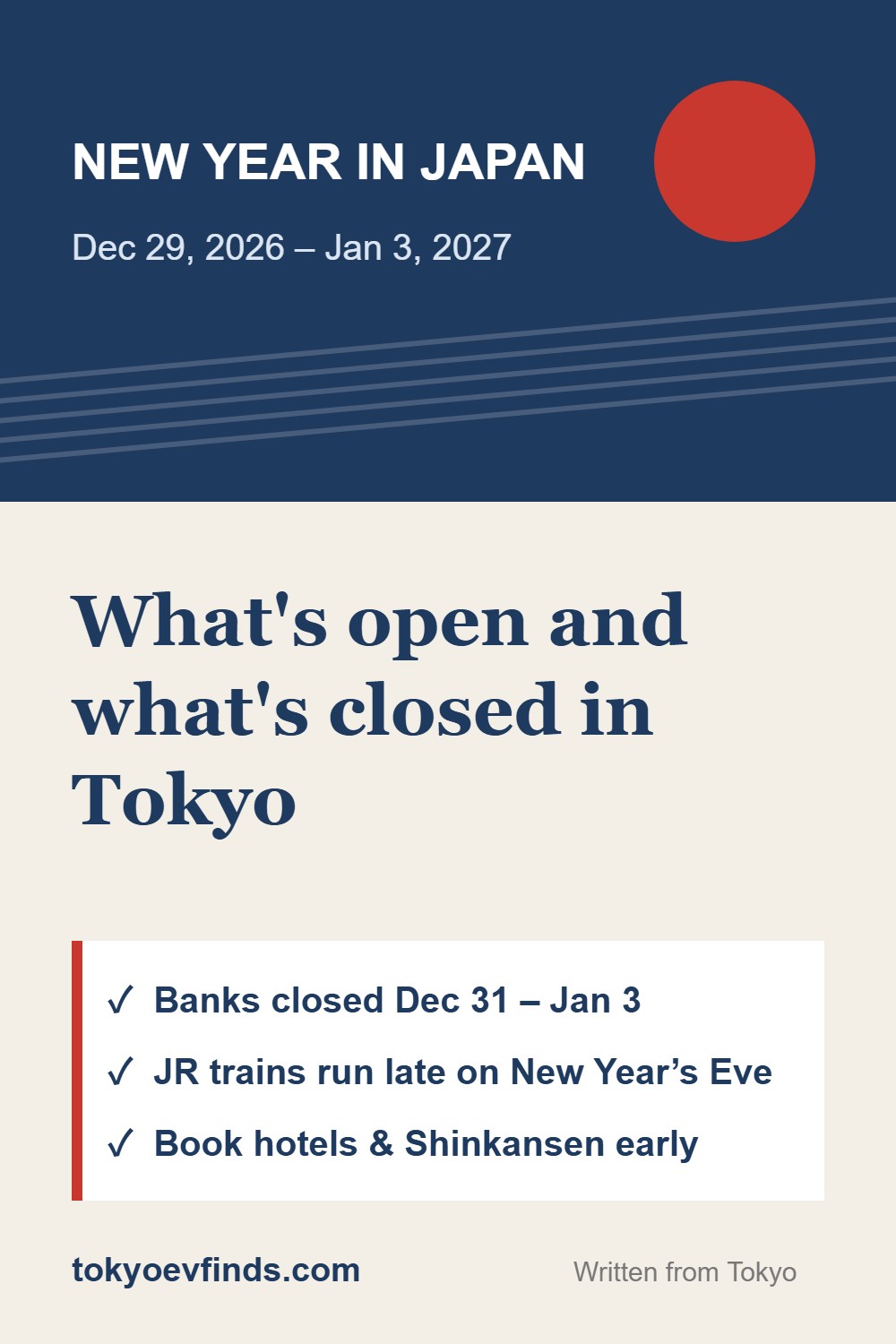
- Closed or limited: banks (December 31 – January 3), government offices, many museums for several days around New Year, and many small family-run restaurants and shops, especially January 1–3.
- Shopping: most department stores close on January 1 and reopen on January 2 with New Year sales and lucky bags (fukubukuro).
- New Year’s Eve: JR East runs extra overnight trains on six Tokyo-area lines, including the Yamanote Line.
| What usually happens | Tip | |
|---|---|---|
| Convenience stores | Open 24 hours, as usual | Your backup for cash, food, and essentials |
| Banks | Closed December 31 – January 3 | Use convenience-store ATMs; 7-Eleven ATMs accept most foreign cards |
| Department stores | Most close January 1; New Year sales start January 2 | Go early for lucky bags — lines form before opening |
| Museums | Many close for several days around New Year | Check each museum’s holiday schedule before you go |
| Restaurants | Chains and hotel restaurants stay open; many small places close January 1–3 | Book New Year’s Eve and New Year’s Day meals ahead |
| Trains | Holiday timetables; extra overnight JR trains on New Year’s Eve | See the details below |
| Shinkansen | Very crowded around December 28–30 (leaving Tokyo) and January 2–4 (returning) | Reserve seats as early as you can |
New Year’s Eve: temple bells and late trains
New Year’s Eve in Japan is quieter than in many countries. People eat toshikoshi soba (“year-crossing” noodles), and at midnight temples ring their bells 108 times. Many people head straight to a shrine or temple for their first prayer of the year, so the big ones — Meiji Jingu and Senso-ji in Asakusa — are packed around midnight.
Overnight trains in 2026: JR East announced on October 22, 2026 that it will run extra trains after the last regular services on December 31 on six lines:
- Yamanote Line (both directions): about 1:00–4:50 am, every 10–30 minutes
- Keihin-Tohoku / Negishi Line (Sakuragicho – Omiya): about 1:00–4:00 am
- Chuo-Sobu Line local trains (Mitaka – Chiba): about 0:10–4:40 am
- A few trains on the Chuo Line Rapid (Mitaka – Takao), Yokosuka Line (Yokohama – Zushi), and Sobu / Narita Line (Chiba – Narita)
Last year, Tokyo Metro and Toei subway lines did not run all night, so check their announcements for 2026 before relying on them.
Hatsumode: the first shrine visit of the year
From January 1 to 3, millions of people visit shrines and temples to pray for the year ahead, buy new good-luck charms, and draw omikuji (fortunes). Joining in is welcome. To avoid the longest lines, go early in the morning or on January 3 rather than at midnight or on January 1.
January 2: the Emperor’s New Year greeting
Every year on January 2, the public can enter the Imperial Palace grounds to see the Emperor, the Empress, and members of the Imperial Family greet visitors from a palace balcony. In recent years, the gates have opened around 9:30 am and closed around 2:10 pm, with five appearances through the day. Expect bag checks and queues that can take over an hour. The Imperial Household Agency confirms the details in December, and the event is occasionally canceled — it was in 2024, after the Noto Peninsula earthquake.
The palace is a short walk from Tokyo Station along Gyoko-dori — see the Tokyo Station guide. Until December 25, the same avenue is lit up for the Marunouchi winter illuminations.
Book hotels and Shinkansen early
New Year is peak season for domestic travel. Tokyo hotels get more expensive and fill up, especially for December 30 – January 2, so book as early as you can. Compare Tokyo hotels on Agoda.
If you plan to travel by Shinkansen, avoid the busiest days if you can and reserve seats in advance. Compare Shinkansen tickets on Klook, and if you are considering a rail pass, read JR Pass prices after October 1, 2026 first.
Tips from a Tokyo local
- Carry some cash. Banks are closed, and some small shrines and stalls only take cash.
- Plan your meals. January 1 is the hardest day to find small restaurants open; hotel restaurants, chains, and convenience stores are reliable.
- Enjoy the quiet. On the morning of January 1, central Tokyo is unusually empty — a good time for photos.
- Dress warmly. Lines at shrines and the Imperial Palace mean standing outside in the cold.


Leave a Reply