This post contains affiliate links. If you book through them, I may earn a small commission at no extra cost to you. Full disclosure here.
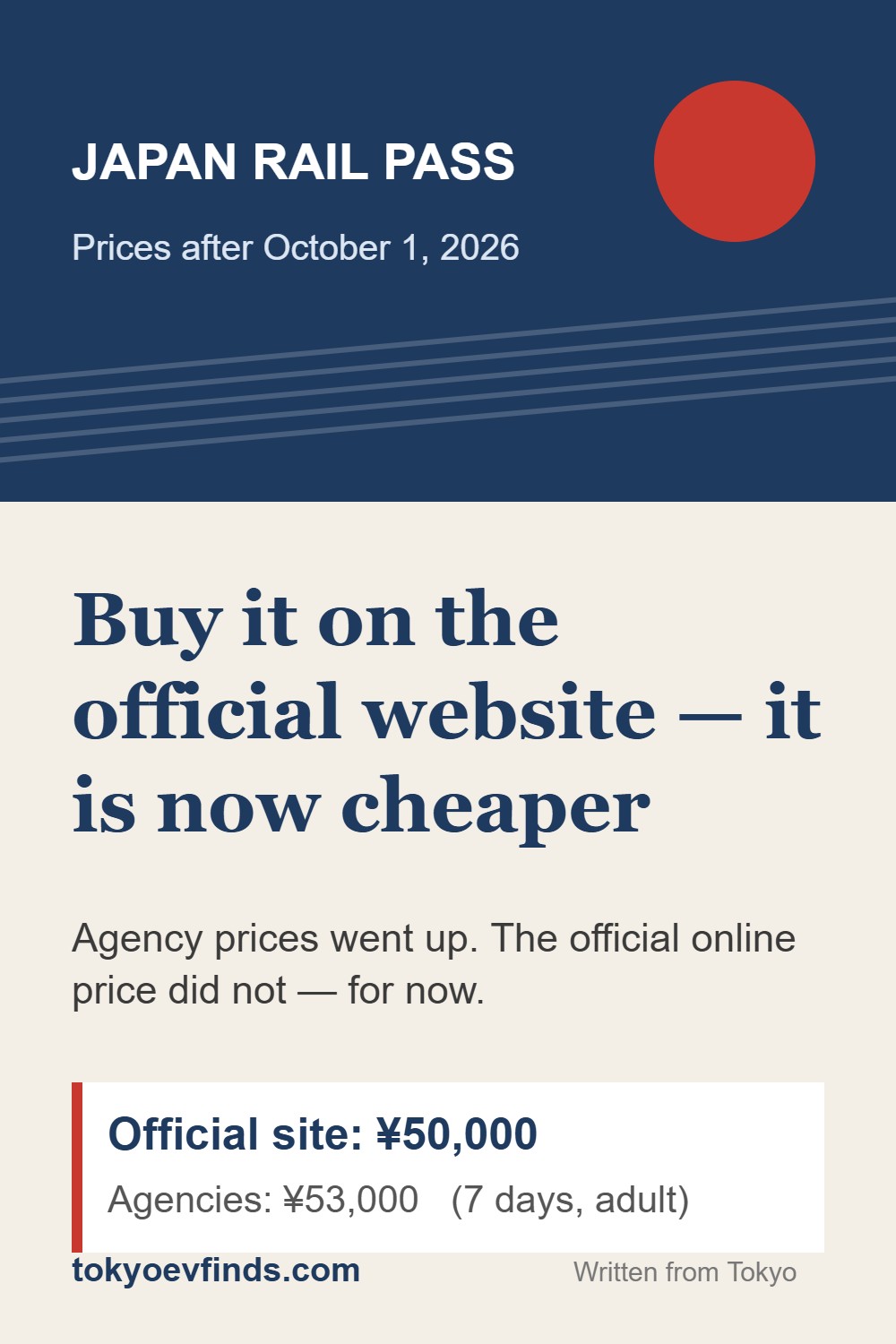
The Japan Rail Pass got more expensive on October 1, 2026 — but only if you buy it from an overseas agency. I checked the official JR Pass price page on October 7, 2026: buying online on the official website still costs ¥50,000 for a 7-day pass, while agency vouchers are now ¥53,000.
Most articles about the increase were written before it happened and never mention the online exception. Here’s where to buy now, whether the pass still pays off, and what to get instead if it doesn’t.
The short answer
- Buy on the official JR Pass website. Right now it is ¥3,000–7,000 cheaper than buying the same pass through an agency.
- Do not wait too long. JR says the online price freeze is for a limited time and will announce when it ends. You pay the price shown on the day you buy.
- Only visiting Tokyo and Kyoto/Osaka? Skip the pass. Individual Shinkansen tickets usually cost less.
Japan Rail Pass prices after October 1, 2026
| Pass (adult) | Official website | Overseas agencies | Agency costs |
|---|---|---|---|
| 7 days | ¥50,000 | ¥53,000 | +¥3,000 |
| 14 days | ¥80,000 | ¥84,000 | +¥4,000 |
| 21 days | ¥100,000 | ¥105,000 | +¥5,000 |
| 7 days (Green Car) | ¥70,000 | ¥74,000 | +¥4,000 |
| 14 days (Green Car) | ¥110,000 | ¥116,000 | +¥6,000 |
| 21 days (Green Car) | ¥140,000 | ¥147,000 | +¥7,000 |
Children aged 6–11 pay about half. This is a far smaller jump than the roughly 70% increase in October 2023 — about 5–6% this time, and only at agencies.
Already bought an agency voucher before October 1?
You keep the old price. JR applies the price on the date the exchange order was issued, not the date you travel. Just make sure you exchange the voucher for the actual pass within its validity period.
Is the JR Pass still worth it?
The simple test: add up the regular fares for every JR trip you’ll take inside the pass window. If the total is clearly above the pass price, buy the pass. If it’s close or below, don’t.
A Tokyo–Kyoto round trip by Shinkansen costs roughly ¥27,000–28,500, depending on train and seat type. That is only about half of a 7-day pass. So the classic “Tokyo + Kyoto + Osaka” first trip usually comes out cheaper with individual tickets.
The pass starts paying off when you add long legs within the same 7 days — for example Tokyo → Kyoto → Hiroshima → Tokyo, or a trip that includes Tohoku, Hokkaido, or Kyushu.
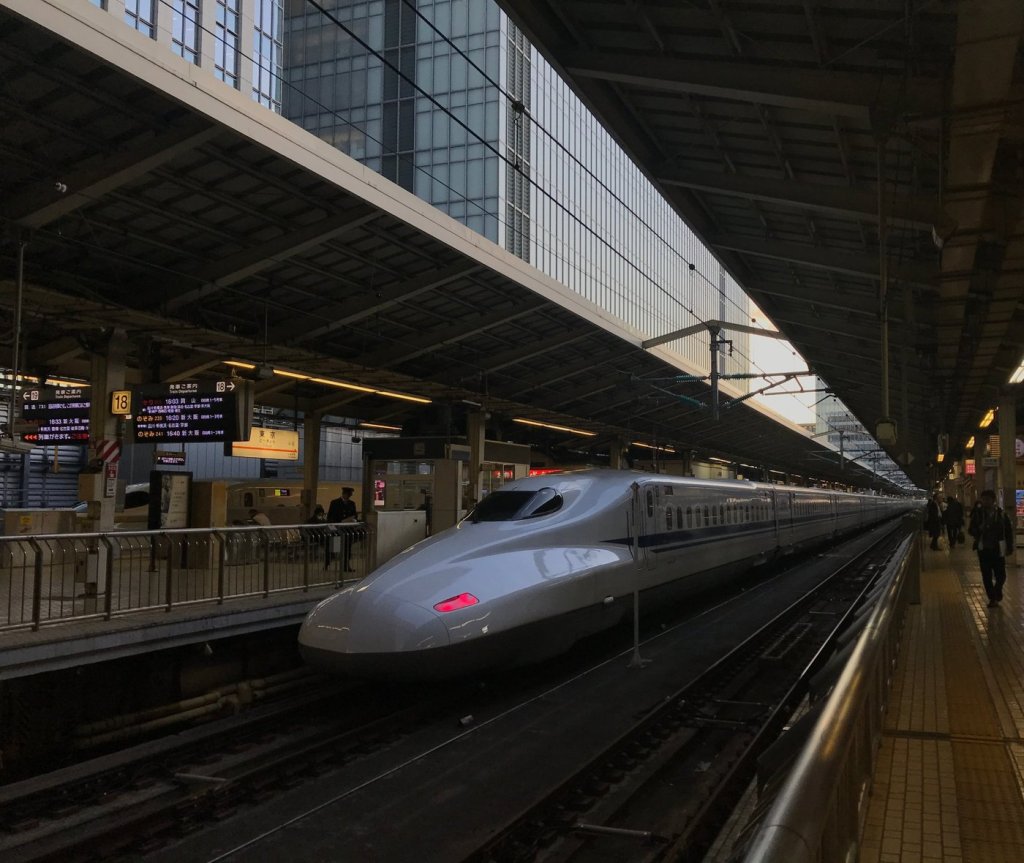
One catch: the fastest Nozomi and Mizuho Shinkansen trains are not fully covered. Pass holders need a special supplement ticket to ride them, or can take the slightly slower Hikari and Sakura trains at no extra cost.
If the pass doesn’t pay off: what to buy instead
- Individual Shinkansen tickets — best for Tokyo ↔ Kyoto/Osaka trips. You can book them online before you fly. Compare Shinkansen tickets on Klook
- Regional JR passes — cheaper passes that cover one area (Kansai, the Tokyo region and Tohoku, Kyushu, and others). Great if your trip stays in one region. Browse JR regional passes on Klook
- An IC card for city travel — for subways and local trains inside Tokyo or Osaka, no pass beats a rechargeable IC card loaded on your phone.
FAQ
Will the official website raise its price too?
Probably, eventually. JR says the freeze is temporary and the end date will be announced once it is decided. Check the official price page on the day you buy.
Why recommend the official site if this page has affiliate links?
Because it’s cheaper for the JR Pass itself right now. The Klook links above are for the alternatives — single Shinkansen tickets and regional passes — when the nationwide pass doesn’t pay off.
Who can use the Japan Rail Pass?
Foreign visitors entering Japan with “Temporary Visitor” status. Check the official site for the full eligibility rules before buying.


Leave a Reply