This post contains affiliate links. If you book through them, I may earn a small commission at no extra cost to you. Full disclosure here.
Japan changed several of the costs visitors pay in 2026. None of them is huge on its own, but together they can add a noticeable amount to a trip — especially if you stay in Kyoto or shop a lot. Here is every change worth knowing about, checked against official sources in October 2026.
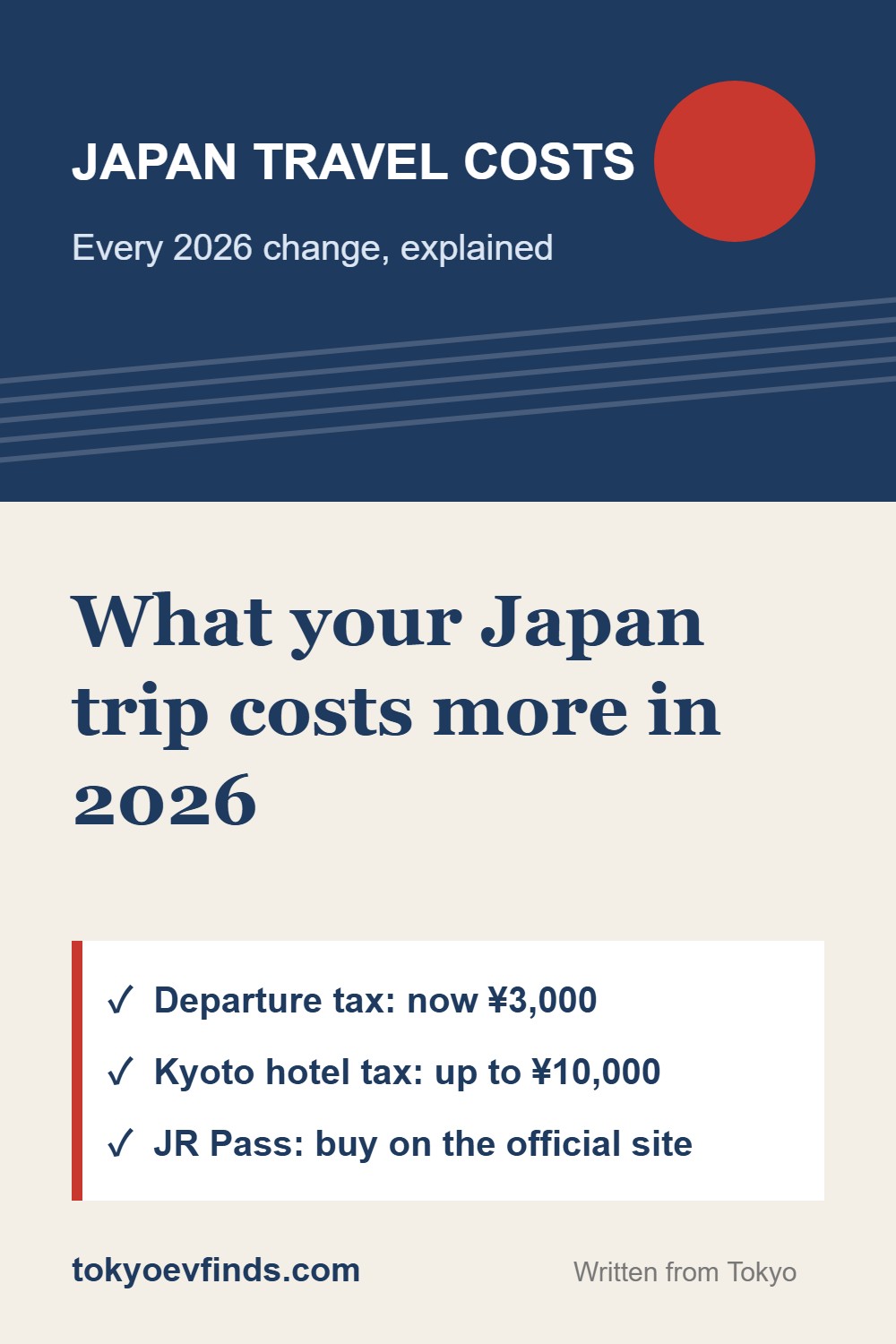
The short answer
| Change | When | What it means for you |
|---|---|---|
| Departure tax | From July 1, 2026 | ¥3,000 per person each time you leave Japan, up from ¥1,000 |
| Kyoto accommodation tax | From March 1, 2026 | ¥200 to ¥10,000 per person, per night, depending on the room rate |
| Japan Rail Pass | From October 1, 2026 | ¥3,000–7,000 more at agencies; the official website kept the old price for now |
| Tax-free shopping | From November 1, 2026 | Pay full price at the store; tax refunded after a customs check at the airport |
1. Departure tax: now ¥3,000
Japan’s International Tourist Tax — the departure tax — rose from ¥1,000 to ¥3,000 per person on July 1, 2026. It applies to most people leaving Japan; children under two and passengers transiting within 24 hours are exempt. It is normally collected through your airline or ferry ticket, so you will usually see it in the ticket price rather than pay it at the airport. A family of four (all aged two or older) now pays ¥12,000 in total.
2. Kyoto’s accommodation tax: up to ¥10,000 a night
Kyoto restructured its accommodation tax on March 1, 2026. It is charged per person, per night, and is usually paid at the hotel rather than included in the online room rate.
| Room rate per person, per night | Tax per person, per night |
|---|---|
| Under ¥6,000 | ¥200 |
| ¥6,000 – ¥19,999 | ¥400 |
| ¥20,000 – ¥49,999 | ¥1,000 |
| ¥50,000 – ¥99,999 | ¥4,000 |
| ¥100,000 or more | ¥10,000 |
Example: a couple paying ¥25,000 each per night for three nights pays ¥1,000 × 2 people × 3 nights = ¥6,000 in Kyoto accommodation tax.
Tokyo, Osaka, and several other cities also charge accommodation taxes, but they are much lower — at most a few hundred yen per person per night, and cheaper rooms are exempt. Check your booking confirmation for the exact amount.
3. Japan Rail Pass: buy it on the official website
On October 1, 2026, Japan Rail Pass prices went up at overseas agencies — the 7-day pass is now ¥53,000 there. The official JR Pass website still sells it for ¥50,000 for now. Full details: JR Pass Prices After October 1, 2026.
If your route is just Tokyo and Kyoto/Osaka, individual Shinkansen tickets usually cost less than the pass. Compare Shinkansen tickets on Klook.
4. Tax-free shopping: you pay first, get the tax back later
From November 1, 2026, tax-free shopping switches to a refund system. You pay the full price including the 10% consumption tax (8% on food and drinks), and the tax is refunded after customs confirms at the airport that you are taking the goods out of Japan. Budget for the full price while you travel. Full details: Japan’s New Tax-Free Shopping Rules.
Three ways to keep these costs down
- Stay in Osaka and day-trip to Kyoto if you are booking an expensive room — Kyoto’s top tiers are by far the highest accommodation tax in Japan.
- Check whether the JR Pass pays off before buying, and buy it on the official website while the old price lasts.
- Keep a small buffer for taxes paid at the hotel and for tax that is only refunded after you leave.
Getting connected is another cost to plan for. See how to choose an eSIM for Japan.


Leave a Reply